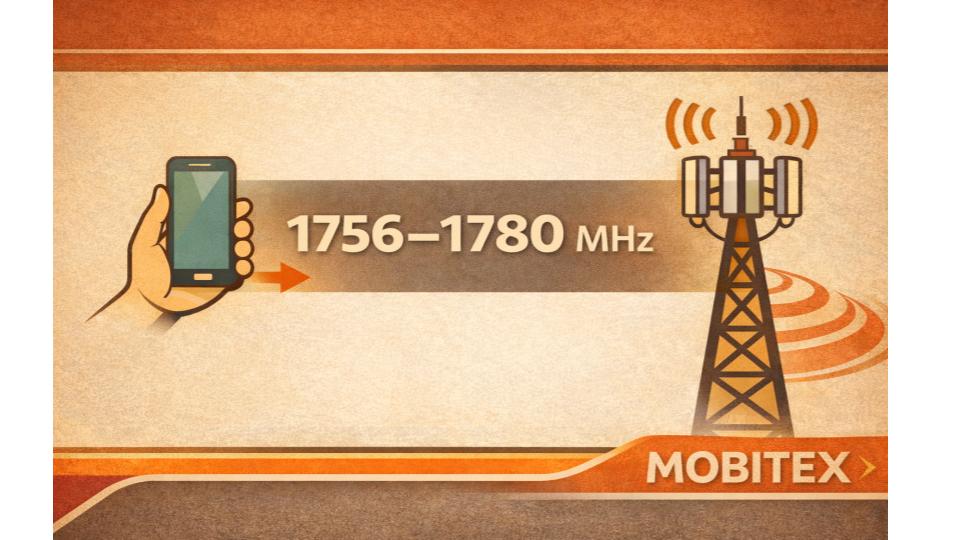
The 1756–1780 MHz frequency band occupies a strategically important position in the radio spectrum. While it is less well known than some neighboring bands, it plays a meaningful role in modern cellular networks by supporting uplink capacity, particularly in high-traffic environments.
This band is part of the broader IMT (International Mobile Telecommunications) ecosystem and is used exclusively for terrestrial mobile communications, not satellite or navigation services.
📱 Primary Use: Cellular Uplink (Device → Base Station)
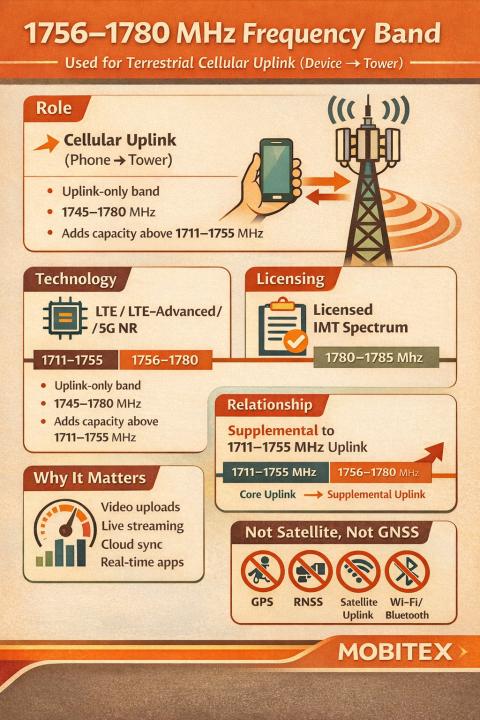
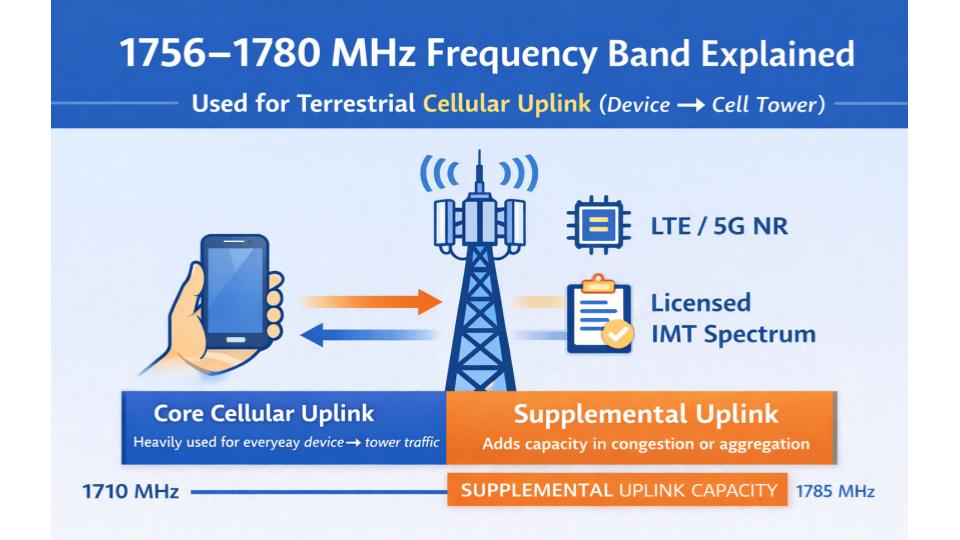
The 1756–1780 MHz band is used for cellular uplink, meaning it carries signals transmitted from user devices, such as smartphones and modems, to nearby cellular base stations.
It supports:
- LTE (4G) uplink
- LTE-Advanced uplink carrier aggregation
- Selective 5G NR uplink use in refarmed or shared deployments
There is no downlink transmission in this band for consumer cellular systems. Its role is strictly upstream.
🏗️ How the Band Is Deployed
From a network-engineering perspective, 1756–1780 MHz is deployed using standard terrestrial cellular infrastructure.
Typical characteristics include:
- Base stations: Macrocell towers and some small cells
- Antenna gain: ~15–18 dBi sector antennas
- Tower height: ~15–50 m
- Backhaul: Fiber-optic networks, with microwave backhaul as a secondary option
There is no satellite component involved. All communications occur between ground-based devices and ground-based infrastructure.
🌍 Licensing and Regulatory Context
This spectrum is licensed, meaning it is allocated to mobile network operators by national regulators rather than being open for unlicensed use.
In several regions, particularly the United States, 1756–1780 MHz was introduced as part of expanded cellular licensing frameworks, including AWS-3, which brought additional uplink capacity but also introduced coordination requirements with incumbent government or defense systems.
As a result, deployment rules may vary by country and are sometimes more complex than for older, long-established uplink bands.
🔍 How It Relates to the 1711–1755 MHz Band
The 1756–1780 MHz band sits directly above 1711–1755 MHz, another major cellular uplink range, and the two are often used together.
The key distinction is that 1711–1755 MHz functions as the core uplink band in many networks, handling a large share of everyday uplink traffic. 1756–1780 MHz, by contrast, is typically used as an uplink extension, providing additional capacity when networks become uplink-constrained.
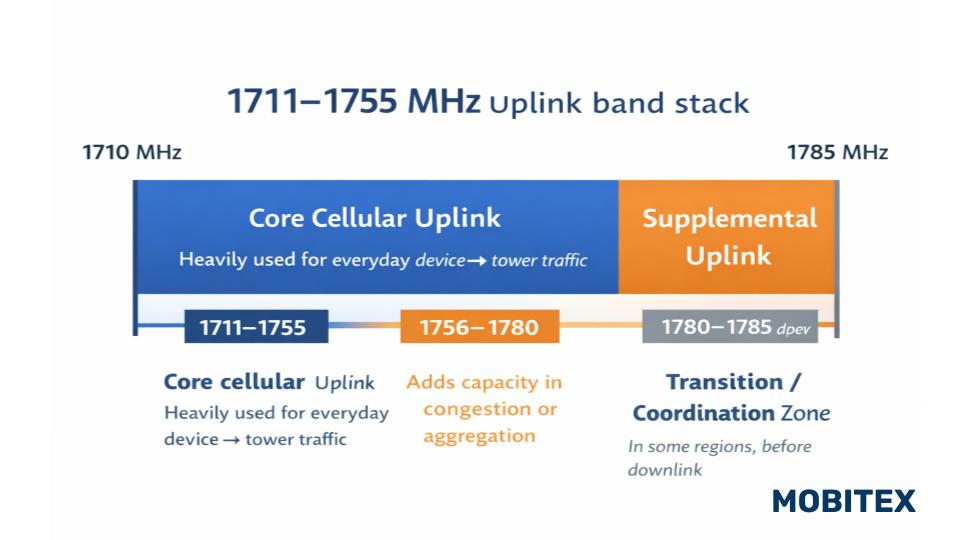
While both bands serve the same technical purpose and use the same infrastructure, 1756–1780 MHz is generally deployed more selectively and may be subject to tighter coordination or sharing rules depending on the region.
⚠️ Interference and Coordination Considerations
Because this band is adjacent to other important allocations, its use requires careful planning.
Key considerations include:
- Strict uplink emission masks for user equipment
- Coordination with adjacent cellular blocks
- In some regions, coexistence requirements with non-commercial users
Despite these constraints, 1756–1780 MHz is fully operational spectrum, not a passive guard band.
❌ What This Band Is Not Used For
The 1756–1780 MHz band is not used for:
- GPS or other GNSS services
- Satellite navigation
- Satellite phone uplinks
- Wi-Fi, Bluetooth, or other unlicensed technologies
Any classification suggesting satellite or navigation use in this range is incorrect.
🧭 Why the 1756–1780 MHz Band Matters
As mobile networks evolve, uplink demand continues to grow due to:
- Video uploads
- Live streaming
- Cloud backups
- Real-time collaboration and gaming
Bands like 1756–1780 MHz help operators manage this demand by adding uplink capacity without requiring new tower sites or major infrastructure changes.
While it may not be as visible as downlink spectrum, this band plays a quiet but important role in maintaining balanced, high-performance cellular networks.
📌 Summary
- Frequency range: 1756–1780 MHz
- Primary role: Cellular uplink (device → tower)
- Technology: LTE, LTE-Advanced, selective 5G NR
- Licensing: Licensed IMT spectrum
- Infrastructure: Terrestrial cellular networks
- Relationship to 1711–1755 MHz: Supplemental uplink capacity