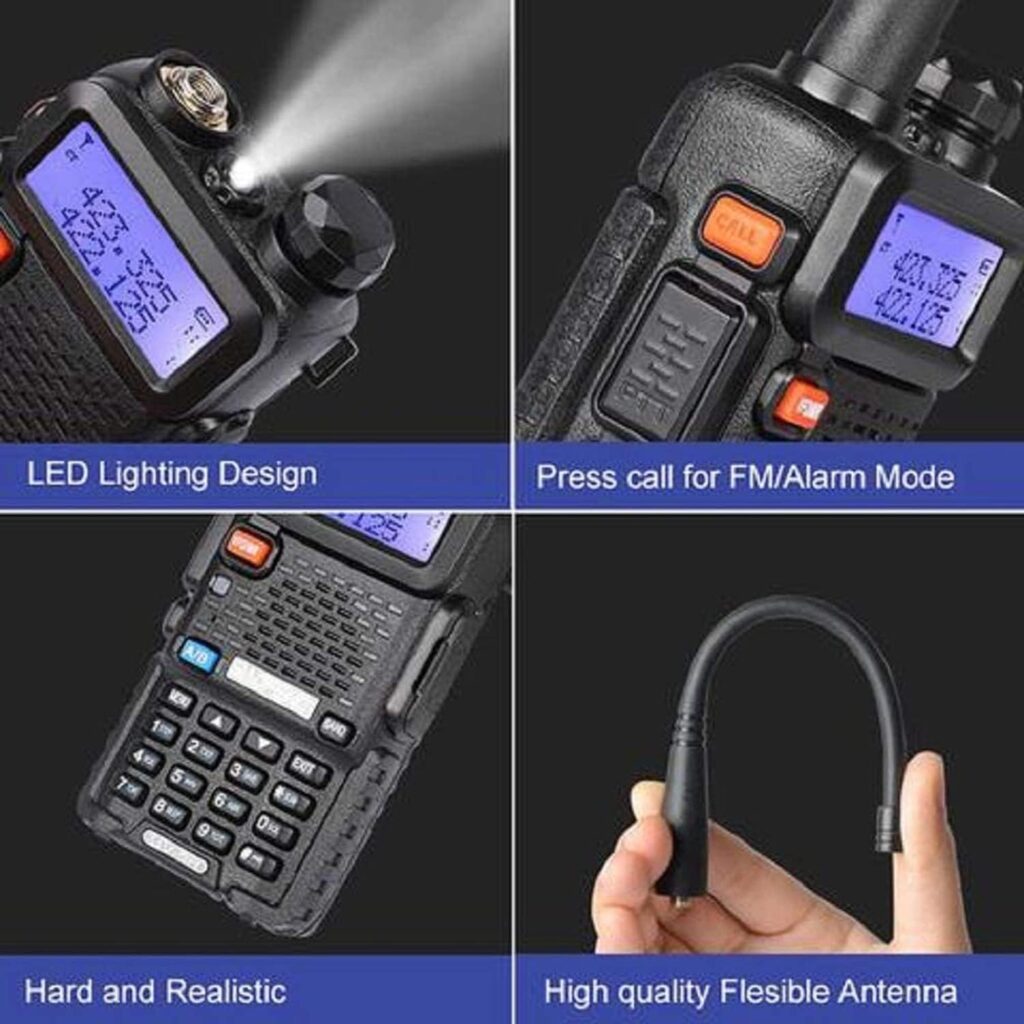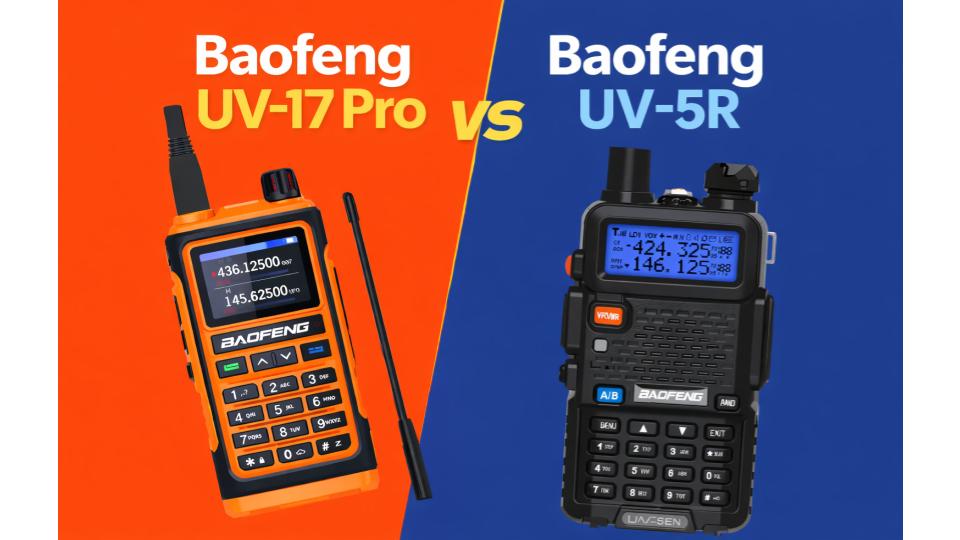
The Baofeng UV-5R is one of the most recognisable radios in amateur radio history. Since it appeared in 2012, it has introduced countless people to the hobby and become the default recommendation for anyone asking what their first handheld should be. The UV-17 Pro is Baofeng’s answer to what comes next: more channels, a colour screen, multi-band receive, GPS, USB-C charging, and an IP-rated body, all for roughly the same price.
Quick Recommendation
Best ultra-budget handheld: Baofeng UV-5R — the cheapest entry into amateur radio with unmatched community support.
Best modern upgrade: Baofeng UV-17 Pro — better hardware, USB-C charging, colour display, GPS, and weather resistance.
If you are deciding between the two, the question is not really about price. It is about what you need, and whether the UV-5R’s decade of community support outweighs the UV-17 Pro’s meaningfully better hardware.
Frequency Coverage
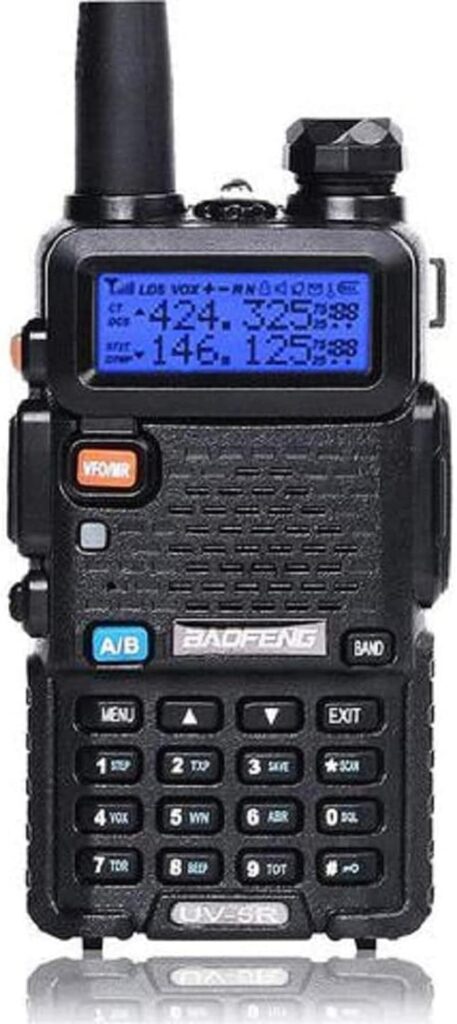
The UV-5R is a straightforward dual-band radio covering 136–174 MHz VHF and 400–520 MHz UHF for transmission, with FM broadcast receive added. That is all it does, and it does it reliably.
The UV-17 Pro covers considerably more ground. For transmission it handles VHF (136–174 MHz), the 1.25 m band (220–260 MHz), and UHF (400–520 MHz). For receive it adds the AM aviation band (108–136 MHz), FM broadcast, and ten dedicated NOAA weather channels.
The air band receive is genuinely useful. Users report clear reception of airport tower transmissions. One practical caveat: real-world reports suggest transmit power on the 1.25 m band is minimal or non-functional on some units. Verify before relying on it.
Display and Ergonomics
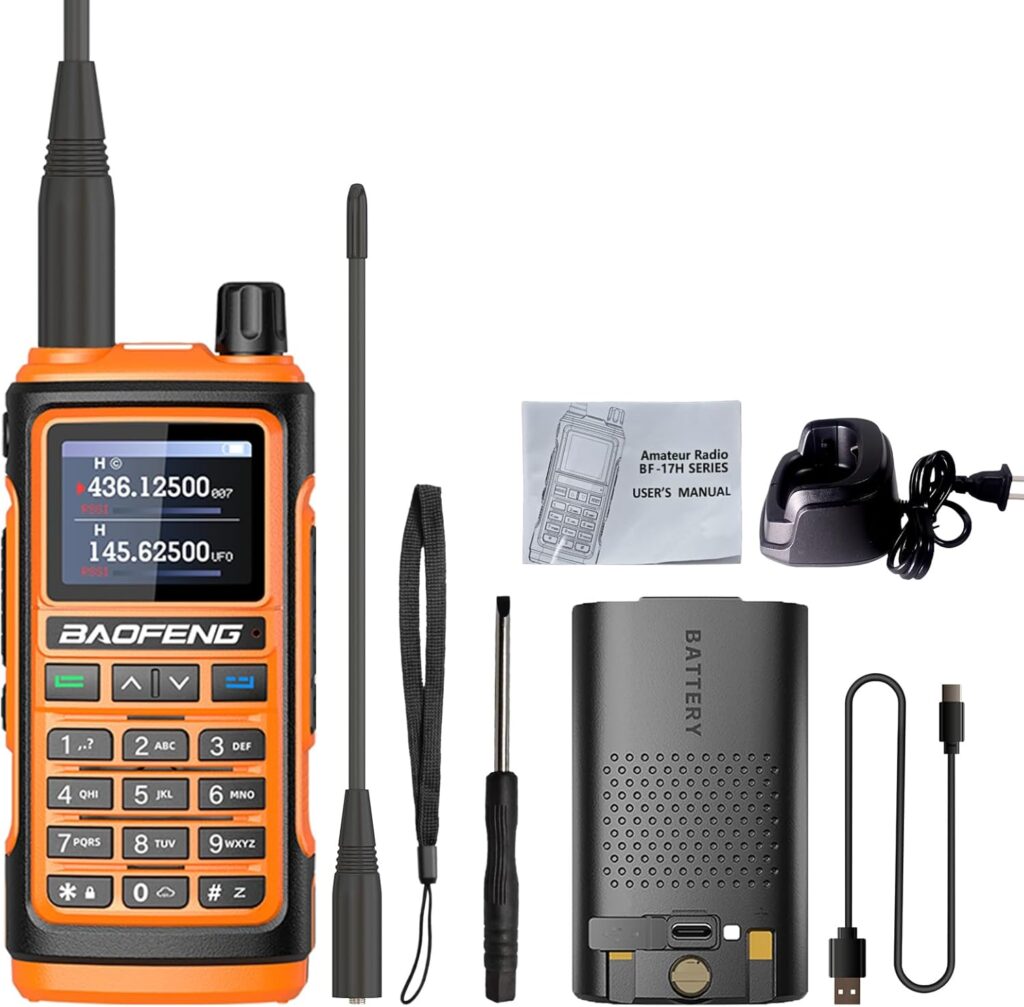
The UV-5R uses a small monochrome LCD with tri-colour backlighting. It works, but it is showing its age. The UV-17 Pro has a 1.77-inch colour TFT display showing channel name and frequency simultaneously in a dual-display layout. It is noticeably easier to read and navigate, though like most TFT displays on budget radios it can wash out in very bright direct sunlight.
Battery and Charging
Both radios ship with 1,800 mAh batteries – identical capacity on paper. The difference is how you charge them. The UV-5R uses a proprietary drop-in desktop cradle with no USB option, which increasingly feels like a limitation. Extended batteries up to 3,800 mAh are available for the UV-5R from the massive aftermarket ecosystem.
The UV-17 Pro charges via USB-C, directly through the body as well as via desktop cradle. In the field, one cable charges your radio, your phone, and your power bank. For emergency preparedness and outdoor use, not having to carry a dedicated charging cradle is a meaningful practical advantage.
Ruggedness
The UV-5R has no formal IP rating and no weather resistance. Rain will damage it. The UV-17 Pro carries an IP45 rating – protected against dust and water jets from any direction. It is not submersible, but it handles rain, splashing, and dusty environments comfortably. For anyone who uses their radio outdoors, this is the single most underrated difference between the two.
GPS, NOAA, and Additional Features
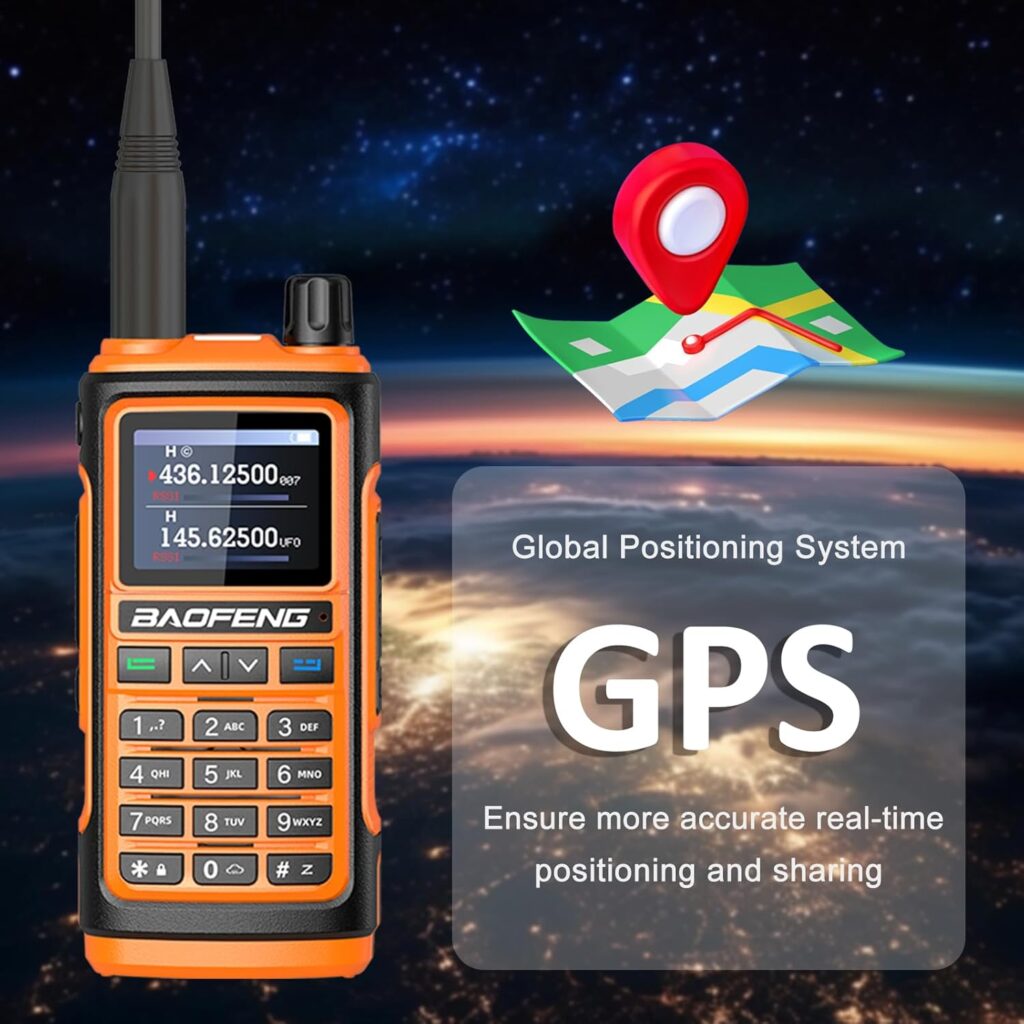
The UV-17 Pro includes a functioning GPS receiver that acquires satellite lock quickly and allows basic location sharing between UV-17 Pro GPS units. It is a simple implementation rather than full APRS, but it adds genuine utility for hiking groups, search and rescue, and emergency communications.
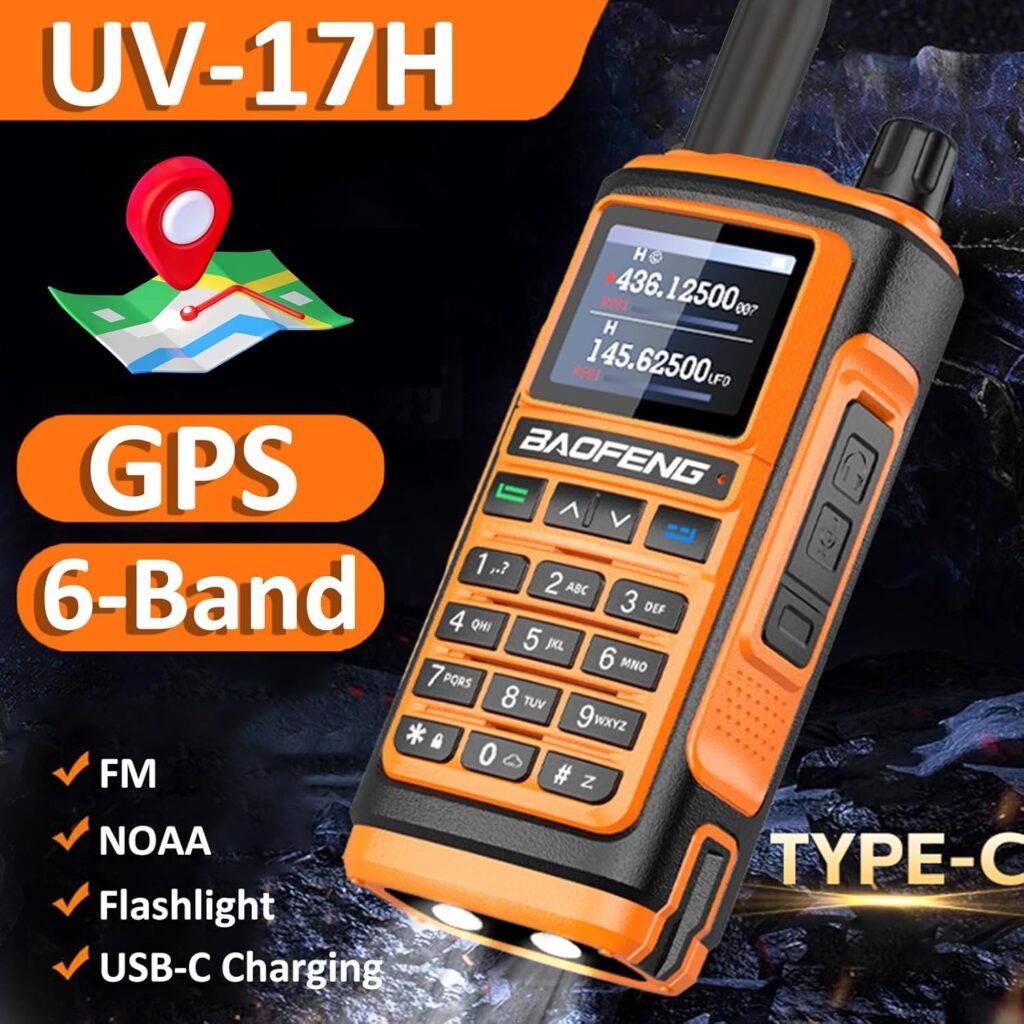
The UV-5R has no GPS, no NOAA weather channels, and no air band receive in any variant.
The UV-17 Pro also includes wireless frequency copy – the ability to clone channel settings from one radio to another over the air without a computer – and 999 memory channels across 10 banks compared to the UV-5R’s 128.
Accessory Ecosystem and Community Support
The UV-5R wins this category without contest. Thirteen years on the market have produced an enormous ecosystem: antennas, extended batteries, speaker-microphones, holsters, and aftermarket accessories of every description. CHIRP support is comprehensive. Community documentation, repeater lists, and troubleshooting guides number in the thousands. If you have a question about the UV-5R, the answer exists somewhere online.
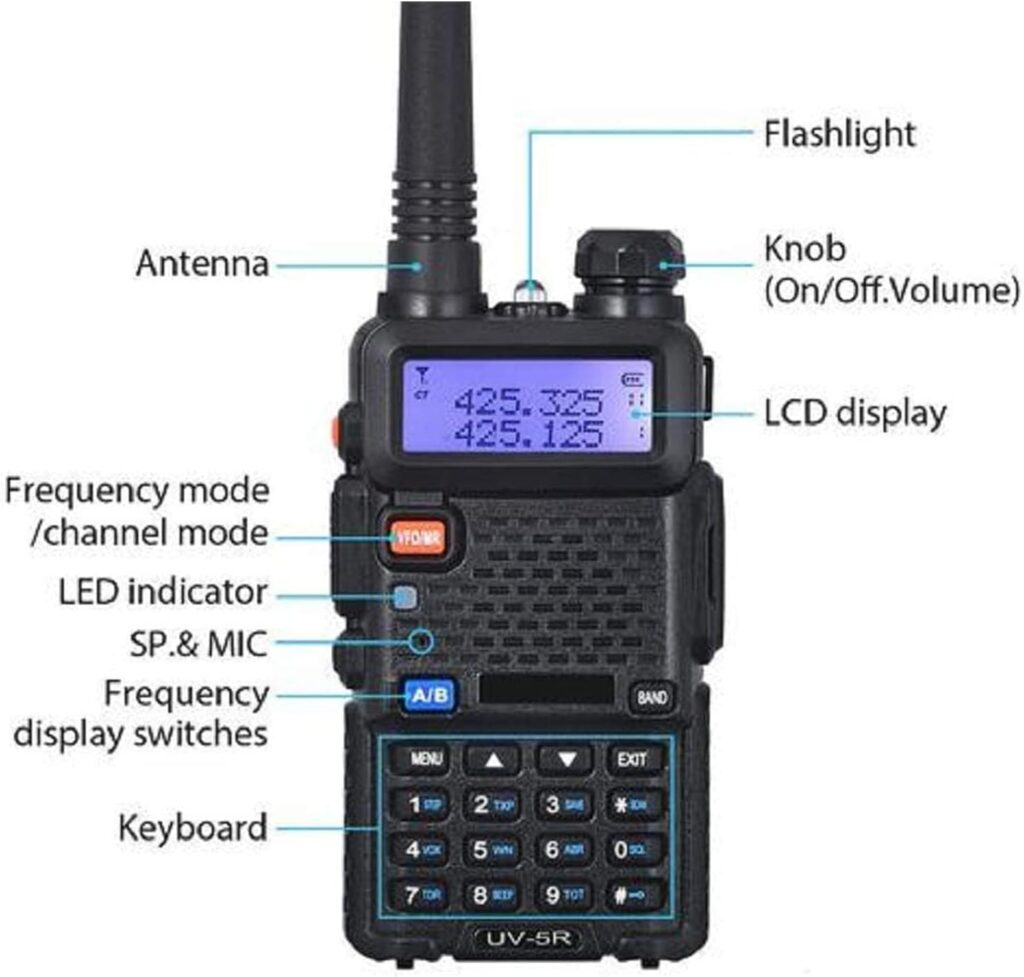
The UV-17 Pro uses the same standard K-type connector for audio accessories, so earpieces and speaker-microphones cross-compatible. CHIRP support exists and is functional, but documentation is thinner and the multiple hardware variants in circulation – GPS vs non-GPS, different firmware revisions – add confusion the UV-5R’s more homogeneous history avoids.
Which Should You Buy?
Choose the UV-5R if:
- You want the cheapest handheld radio possible
- You are new to amateur radio
- You want the biggest ecosystem of accessories
Choose the UV-17 Pro if:
- You want USB-C charging
- You operate outdoors in rain or dust
- You want GPS, NOAA weather alerts, and air band receive
Comparison Table
| Feature | Baofeng UV-5R | Baofeng UV-17 Pro GPS |
|---|---|---|
| TX frequency | VHF, UHF | VHF, 1.25m, UHF |
| RX frequency | VHF, UHF, FM | VHF, UHF, Air band, FM, NOAA |
| Output power | 5W / 1W | 5W / 1W |
| Memory channels | 128 | 999 (10 banks) |
| Display | Monochrome LCD | 1.77″ colour TFT |
| Battery | 1,800 mAh | 1,800 mAh |
| Charging | Proprietary cradle | USB-C + cradle |
| GPS | No | Yes |
| NOAA weather | No | Yes (10 channels + alert) |
| Air band receive | No | Yes (AM, 108–136 MHz) |
| IP rating | None | IP45 |
| Wireless freq. copy | No | Yes |
| CHIRP support | Excellent | Good |
| Accessory ecosystem | Extensive | Growing |
| Price (approx.) | Check Price | Check Price |
Pros and Cons
Baofeng UV-5R
Best for: beginners, backup radios, and the lowest-cost entry into amateur radio.
- Dual-band VHF/UHF handheld
- Massive accessory ecosystem
- Excellent CHIRP support
- Often available for under $30
Even more than a decade after launch, the UV-5R remains the most widely used beginner handheld radio ever produced.
Check Price on AmazonBaofeng UV-5R — Pros
- Lowest price of any functional amateur radio HT
- Massive accessory ecosystem — batteries, antennas, cases widely available
- Unmatched community support and CHIRP integration
- Simple, proven menu system
- Extended battery options up to 3,800 mAh
Baofeng UV-5R — Cons
- No USB charging, proprietary cradle only
- No IP rating or weather resistance
- Only 128 memory channels
- No GPS, NOAA weather, or air band receive
- Ageing monochrome display
Baofeng UV-17 Pro (GPS Version)
Best for: outdoor use, emergency communications, and anyone wanting a modern upgrade from the UV-5R.
- Colour TFT display
- USB-C charging
- 999 memory channels
- GPS and NOAA weather channels
- IP45 weather resistance
The UV-17 Pro modernizes the classic Baofeng handheld platform with improved hardware, better emissions performance, and far more features.
Check Price on AmazonBaofeng UV-17 Pro GPS — Pros
- USB-C charging from any USB source
- IP45 weather resistance
- 999 channel memory across 10 banks
- Colour display, easier to read and navigate
- GPS with basic location sharing
- NOAA weather alert function
- Air band receive
- Wireless frequency copy
- Improved spurious emissions vs UV-5R
Baofeng UV-17 Pro GPS — Cons
- Higher price, roughly double the UV-5R
- Smaller accessory and battery ecosystem
- Thinner community documentation
- Multiple hardware variants cause purchasing confusion
- 1.25m TX unreliable on some units
- Colour display washes out in direct sunlight
Who Should Buy Which
The UV-5R remains the right choice for one specific situation: you want the cheapest possible entry into amateur radio, you will use it on standard VHF and UHF bands only, and weather resistance is not a concern. For a new technician class licensee, a club member wanting a backup radio, or anyone unsure how much they will use it, the UV-5R’s price and support ecosystem are hard to beat.
The UV-17 Pro is the better radio in almost every measurable way. The USB-C charging alone makes it more practical in the field. The IP45 rating matters for anyone operating outdoors. The GPS and NOAA weather channels add real utility for hiking, camping, and emergency preparedness. If you will use your radio seriously and regularly, the extra $15–25 the UV-17 Pro costs is money well spent.
Neither radio is a substitute for a Yaesu, Icom, or Kenwood at three to ten times the price. But within the budget handheld category, the UV-17 Pro has matured into the stronger all-round radio, while the UV-5R remains the most accessible entry point the hobby has ever had.
Want a Better Handheld Radio?
If you want stronger RF performance, cleaner emissions, and better audio quality, consider stepping up to a radio from Yaesu, Icom, or Kenwood.
- Yaesu FT-65R
- Yaesu FT-60R
- Icom IC-V86
These radios cost more but offer significantly better RF performance and durability.
See Recommended Handheld Radios on Amazon