428 MHz Frequency, Uses, and Global Applications

The 428 MHz frequency resides in the UHF spectrum and supports a wide range of industrial, telemetry, and medical applications. Though not globally harmonized, this frequency is especially important in countries like Japan and South Korea, where it plays a crucial role in wireless metering and healthcare systems.


๐ŸŒ Frequency Summary

ParameterDetails
Center Frequency428 MHz
Common Range426.5โ€“429.5 MHz (depending on country)
ITU Regions๐ŸŒ Region 1 (limited), ๐ŸŒŽ Region 2, ๐ŸŒ Region 3
License TypeVaries (license-exempt in Japan, licensed in US)
Primary UseMedical telemetry, smart meters, industrial IoT
Global HarmonizationNo (country-specific regulations)

๐Ÿ”Œ What Is 428 MHz Used For?

The 428 MHz frequency is tailored for low-power, narrowband wireless applications where reliable performance and long-range connectivity are critical.

๐Ÿ“‹ Typical Applications

  • ๐Ÿฅ Medical Telemetry: Real-time patient monitoring in hospitals (Japan)
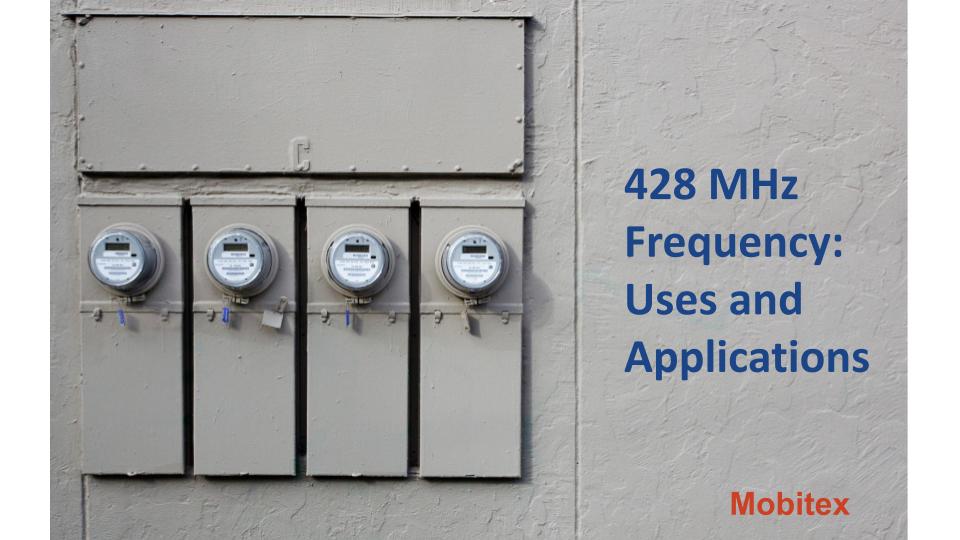
  • โšก Smart Utility Meters: Gas, water, and electric meters using wireless data links
  • ๐Ÿ—๏ธ Industrial Telemetry: Remote monitoring in factories or field equipment
  • ๐Ÿšจ Disaster Communication Systems: Emergency alerting networks in Asia
  • ๐ŸŒฑ Environmental Sensing: Air quality, water level, and temperature monitoring

๐ŸŒ Regional Use Overview

RegionTypical Allocation
๐ŸŒ Region 1 (Europe, Africa)Not harmonized; 433 MHz preferred
๐ŸŒŽ Region 2 (Americas)Part of 420โ€“450 MHz UHF band (Amateur, military use)
๐ŸŒ Region 3 (Asia-Pacific)Actively used in Japan, Korea, Malaysia for telemetry

๐Ÿ‡ฏ๐Ÿ‡ต Japan

  • 426.5375โ€“429.7375 MHz allocated for Low Power Radio Stations
  • Power limit: 10 mW ERP
  • Common in hospitals, utilities, and city-wide alert systems

๐Ÿ‡บ๐Ÿ‡ธ United States

  • Falls within 420โ€“450 MHz UHF amateur band
  • Shared with federal radiolocation services (e.g., military radar)
  • Use restricted; no general license-free use for industrial/medical systems

๐Ÿ‡ฐ๐Ÿ‡ท South Korea

  • Allocated for wireless data transmission and control systems
  • Subject to type approval and government licensing

๐Ÿ“ป Technical Characteristics

CharacteristicDetails
Modulation TypesGFSK, 4FSK, ASK, MSK
Typical Bandwidth12.5 kHz to 200 kHz
Max Transmission Power10 mW ERP (Japan), up to 50 W (licensed US use)
Range (Line of Sight)500 m to 5 km (depending on environment)
Antenna Size~16.5 cm quarter-wave monopole

๐Ÿ” License & Restrictions

RegionLicense RequirementRestrictions
๐Ÿ‡ฏ๐Ÿ‡ต JapanLicense-exemptMax 10 mW ERP, low interference duty cycle
๐Ÿ‡บ๐Ÿ‡ธ USALicensed (Amateur/Radar)Military and amateur shared use only
๐Ÿ‡ฐ๐Ÿ‡ท KoreaLicensed or approvedSubject to local telecom laws
๐Ÿ‡ช๐Ÿ‡บ EuropeNot harmonizedPrefer 433 MHz SRD band
  • Devices may require type approval or certification (e.g., MIC in Japan, FCC in US)
  • In shared bands, coordination or dynamic channel access may be required

๐Ÿ” Adjacent Bands

BandFrequency Range
420โ€“430 MHzGovernment, amateur, radar (USA)
426โ€“429 MHzLow-power telemetry (Japan, Korea)
430โ€“440 MHzAmateur radio, SRD (Europe uses 433 MHz)
440โ€“450 MHzLand mobile, amateur, government use

๐Ÿ› ๏ธ Related Technologies

  • ๐Ÿ“ก LoRa-like Narrowband Systems (in Japan and Korea)
  • ๐Ÿฅ Wireless Medical Telemetry Service (WMTS)
  • ๐Ÿงฐ Proprietary SCADA/RTU Systems
  • ๐Ÿ”ง Utility M2M Protocols (low-bitrate communication)
  • ๐Ÿ“ฆ Wireless Meter Bus (WMBus) alternatives in Asia

๐Ÿงญ Regulatory Authorities

CountryRegulator
๐Ÿ‡ฏ๐Ÿ‡ต JapanMIC (Ministry of Internal Affairs and Communications)
๐Ÿ‡บ๐Ÿ‡ธ USAFCC (Federal Communications Commission) + NTIA (Govโ€™t use)
๐Ÿ‡ฐ๐Ÿ‡ท KoreaMSIT (Ministry of Science and ICT)
๐Ÿ‡ช๐Ÿ‡บ EuropeETSI / National regulators (e.g., Ofcom, ANFR)

๐Ÿ“œ Historical Context

  • Japan pioneered use of 428 MHz for low-power wireless since early 2000s
  • Adopted in smart metering and hospital telemetry ahead of 920 MHz ISM release
  • In the US, 420โ€“450 MHz remains reserved for government and amateur use, limiting commercial adoption
  • Influenced development of narrowband protocols suited to short packets and low duty cycles

๐Ÿงพ Summary

FeatureValue
Center Frequency428 MHz
ApplicationsTelemetry, metering, medical
Global StatusRegion-specific use
Power Limits10 mW ERP (Japan), licensed higher in US
Adjacent Bands426โ€“429 MHz (Asia), 430โ€“440 MHz (Europe)
LicensingMostly restricted or approved use

428 MHz is a specialized, sub-GHz frequency ideal for long-range, low-data wireless communication. While it’s not a globally open band like 433 MHz or 915 MHz, it remains essential in Japan and South Korea, powering medical telemetry, disaster systems, and utility automation. Its low interference profile and solid propagation make it a hidden gem for mission-critical applications in select regions.