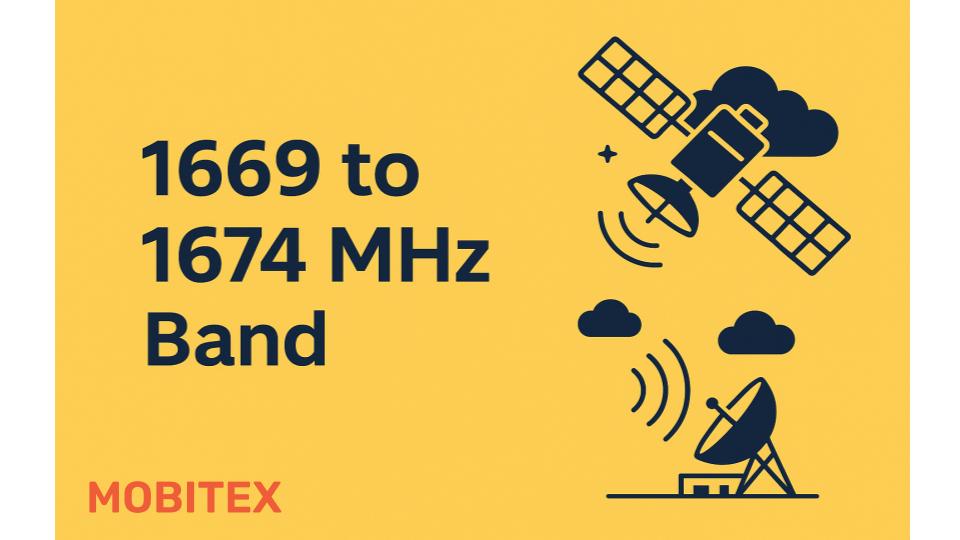
The 1669–1674 MHz band sits just above the globally protected radio astronomy segment and plays a very different role in the L-band ecosystem. Unlike the passive frequencies below it, this range supports active radio services, primarily for meteorological satellite downlinks.
This band is a quiet but essential part of global weather monitoring, environmental observation, and climate science infrastructure.
🌦️ Primary Use: Meteorological Satellite Service (MetSat Downlink)
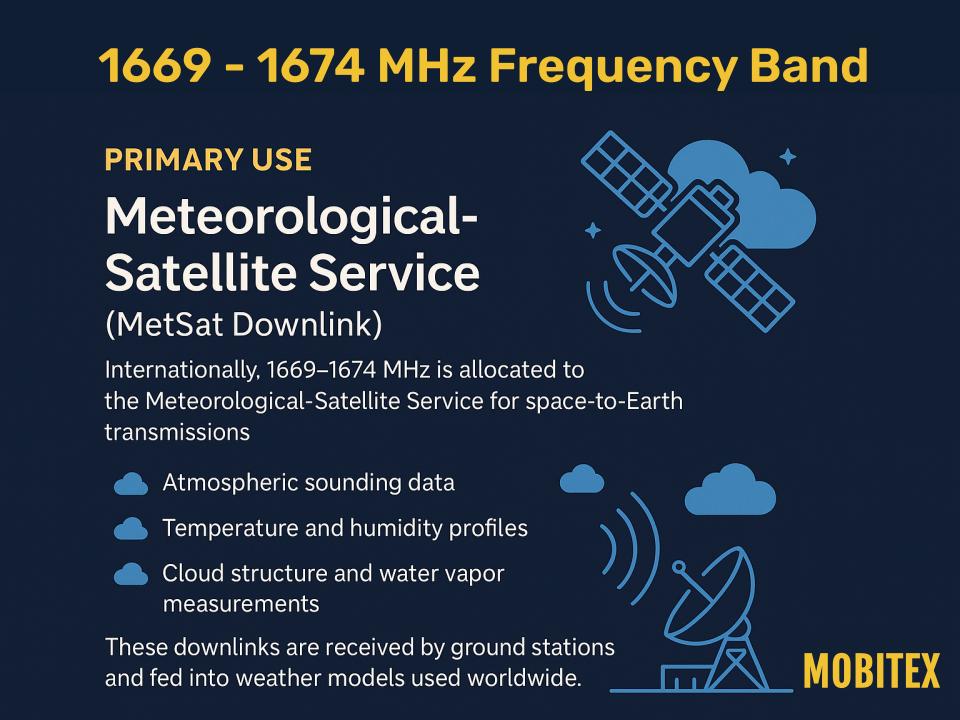
Internationally, 1669–1674 MHz is allocated to the Meteorological-Satellite Service for space-to-Earth transmissions.
Satellites operating in this range transmit:
- Atmospheric sounding data
- Temperature and humidity profiles
- Cloud structure and water vapor measurements
These downlinks are received by ground stations and fed into weather models used worldwide.
🛰️ What Types of Satellites Use This Band
This frequency range is commonly associated with:
- Polar-orbiting weather satellites
- Earth observation platforms
- Environmental monitoring systems
Well-known satellite programs and agencies rely on adjacent or overlapping allocations to deliver:
- Short-range and long-range weather forecasts
- Severe storm tracking
- Climate trend analysis
- Aviation and maritime weather data
The data carried here is not consumer-facing, but it underpins many systems people rely on daily.
🌍 Global Allocation & Regulatory Status
The 1669–1674 MHz band is:
- Harmonized internationally under ITU Radio Regulations
- Allocated primarily to Meteorological-Satellite (space-to-Earth)
- Used across ITU Regions 1, 2, and 3
National regulators such as the FCC, ISED Canada, and Ofcom align closely with the ITU framework for this band, recognizing its importance to global forecasting and safety systems.
📶 Relationship to Adjacent Bands
Understanding this band requires looking at its neighbors.
Below 1669 MHz
- 1661–1668 MHz is reserved for Radio Astronomy (RAS)
- Extremely sensitive, receive-only, and strictly protected
- Strong emission limits apply at the lower edge of 1669 MHz to protect scientific observations
Above 1674 MHz
- Allocations vary by country
- May include fixed, mobile, or additional satellite services
- Emission control remains important to protect meteorological reception
The transition from passive science to active satellite downlink around this boundary is carefully managed.
🛑 Interference & Protection Considerations
Although this band supports active transmissions, it still requires careful coordination.
Regulators enforce:
- Power limits on satellite downlinks
- Ground station siting and coordination rules
- Strict out-of-band emission masks to protect radio astronomy below
- International coordination for satellite systems sharing orbital resources
Interference here can directly degrade weather data quality, affecting forecasts and safety decisions.
🌐 Why This Band Matters
The 1669–1674 MHz band enables:
- Accurate weather forecasting
- Severe weather warnings
- Climate monitoring and research
- Aviation and maritime operational safety
- Disaster preparedness and response
Without reliable meteorological satellite downlinks, modern forecasting models would lose critical real-time inputs.
🚫 What This Band Is Not Used For
This frequency range is not used for:
- Consumer communications
- Mobile phones
- IoT devices
- GNSS navigation
- Unlicensed or experimental transmitters
Access is tightly controlled and limited to authorized satellite systems and receiving infrastructure.
🧭 Summary
The 1669–1674 MHz band is a key L-band meteorological satellite downlink allocation that supports global weather and environmental monitoring.
It:
- Sits just above a protected radio astronomy band
- Carries vital Earth-observation data from space to ground
- Operates under strict international coordination
- Plays a foundational role in forecasting, safety, and climate science
While invisible to end users, this band quietly helps keep aircraft flying safely, ships informed at sea, and communities prepared for severe weather.